The term 'cold reading' refers to strategies used by mentalists and by fraudulent psychics and mediums to give the impression that they can psychically discern personal information about a client.
The reading is 'cold' because it does not depend on any prior knowledge of the client. Instead, the 'psychic' combines careful observations of the client's characteristics and behavior with a series of guesses that are based on deduction, knowledge of probabilities, and use of general ('Barnum') statements that are readily accepted by large numbers of people as being true of themselves.
Cold Reading Techniques
There are several key techniques that form the basis of cold reading. These are:
The cold reader must set the scene for the client, manage client expectations, and elicit client cooperation.
Presentation
It is vital that the client has full confidence in the professionalism and ability of the psychic or medium and this can be encouraged in various ways, for example:
Through advertising.
By displaying testmonials, photographs with celebrity clients, etc., in brochures or on the walls of the consulting room.
By using professional props - e.g., tarot cards, crystal ball, pendulum, runes, or other "mystical" or spiritualist items.
The particular style of presentation must suit the kind of reading offered by a cold reader. For example, a tarot reader will generally present themselves very differently from a spiritualist medium or from a mentalist entertainer.
Managing expectations
Expectations must be managed by briefly explaining to the client what they may receive from the reading, for example:
"We will aim to contact and receive advice from the spirits of the dear departed."
"The tarot cards will show you possibilities for your future life."
"I will try to answer any questions you have about your past and future."
Eliciting cooperation
Cold reading will only succeed if the client is cooperative and actively assists the psychic. This needs to be explained to the client at the outset. For example:
"You will need to help me to read the signs."
"The spirits will need your cooperation."
"It is important that you remain open and receptive."
From these observations, the psychic will be able to make some highly probable guesses about the client. This is sometimes referred to as the "Sherlock Holmes" technique.
For example:
An engagement ring will generally indicate an impending marriage.
Signs that a wedding ring have been removed (e.g., by noticing lighter skin tone on the ring finger) may indicate a recent separation or divorce.
Educational level may be inferred from voice and vocabulary.
Affluence may be inferred from clothing and jewellery.
Particular interests may inferred from T-shirts, badges, etc.
If the reading is done in the client's home, much more information can be gleaned (e.g., from family photographs, bookshelves).
The cold reader will generally aim to pigeon-hole (stereotype) the client into a particular category of person.
The most basic categories are based on gender and age (e.g., teenage female; middle-aged man; elderly woman).
More specific categories and stereotypes can also be useful (e.g., thirty-something, white, well-spoken, apparently affluent, female non-smoker with a New York accent). Consider, for example, what you probably could infer about such a woman.
Having pigeon-holed the client, the reading is then focussed around areas stereotypically of concern to people in this category, and also around any specific deductions that can be made based on observations of the client.
For example:
A mid-teen female is likely to experience difficulties relating to popularity, peer pressure and boys.
A middle-aged, poorly-dressed man who is rather overweight and wears no wedding ring, may have low self-esteem.
An elderly person may have recently lost close friends or family, and may also have their own health concerns.
A man wearing a wedding ring whose breath and clothes smell of alcohol is very likely to have marital problems.
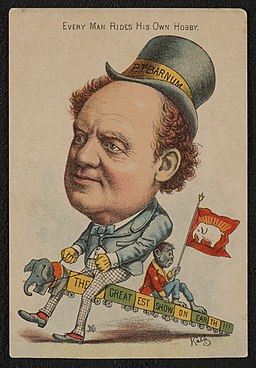
So-called 'Barnum statements' are named after the American showman P.T. Barnum who claimed "we've got something for everyone" and who is also often (incorrectly) credited with coining the phrase "there's a sucker born every minute".
Barnum statements (also known as Forer statements) are those that seem to relate to a particular individual but actually apply to everyone, or almost everyone. Such statements are a typical feature of horoscopes and they are used extensively in cold reading.
Research by psychologists (e.g., B.R. Forer) has shown that such statements are readily accepted by a person if led to believe that the statements apply specifically to them. Because they are easily accepted by the client, such statements also serve to enhance the client's general faith in the psychic.
Examples of Barnum statements are:
"You have much unused potential."
"You get a little anxious in new social situations."
"You have sometimes told white lies to save another person's feelings."
"You have been a victim of a theft or burglary in the past."
"You have a strong need for approval and recognition."
Experienced cold readers will develop their own extensive list of useful Barnum statements which can also be tailored to particular categories of people.
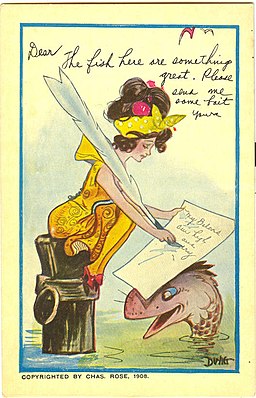
'Fishing' refers to making some very specific, seemingly improbable, statements that may or may not be true of the client.
If the statement turns out to be true, the strength of the "hit" will greatly impress the client, and the statement will be clearly remembered.
If wrong, then the psychic can simply move on to something else and the 'miss' will very likely be forgotten by the client. Alternatively the psychic may prefer to use an 'out' to excuse the failure (see the section on Outs below).
In general (to avoid embarrassing failures) it is best to choose fishing statements that are not too improbable but which are likely to be true of many people.
Examples of fishing statements are:
"The name Jane is significant in some way."
"I am getting something about a car crash."
"You were separated from your father during childhood."
"You used to own a brown dog."
Note that, when fishing, you should generally use statements rather than questions. (e.g., "The name Jane is significant" rather than "Is the name 'Jane' significant?").
You can also go fishing using several baits in one sentence. For example: "I am hearing the name Jane, or perhaps it is Joan, or June, or John". In this way you can maximise your odds of getting a 'hit'.
Fishing is especially effective when cold reading with a large group of people (e.g., stage shows). Names make very useful collective bait. For example, "There is someone named George who has a message for a woman". It is very likely that at least one woman in the audience will know a George who has died.
Experienced cold readers often learn the popular first names for both boys and girls for different decades.
Especially when fishing, you can gauge the accuracy of your statements by observing carefully how the client responds.
In particular, watch the face and hands, and also look out for any uncomfortable shuffling in the seat.
These responses can often give away how the client is feeling about what you are saying. In this way it is generally quite easy to tell if you are on the right track, or completely wrong.
If you are right, then continue along the same line; if wrong, then subtly change track.
There are certain tricks and subtleties in the way that language can be used that will greatly enhance a cold reading.
Verbal ambiguities
Some words have more than one meaning that can be usefully exploited by the cold reader.
For example
"Somebody here knows George". This is a very useful trick often used by spiritualist mediums in group meetings. It is based on the ambiguity of the word "here" - it could mean either "here in the audience" or "here in the spirit world". In this way, the odds of a hit are effectively doubled.
"I am getting something about a will". This could mean either Will (the personal name) or an inheritance or legal document.
"The word 'book' is somehow relevant". This could refer, for example, to an ordinary book (of pages), or "the Book" (Bible), or the telephone book, or a reservation for a show or flight, or a police booking, or a bookmaker (betting), or a financial account, or it could even be a surname.
By observing how the client interprets an ambiguous word, the reading can then follow up that particular meaning.
Stating questions negatively
A very commonly used verbal trick in cold reading is to ask questions in the negative form.
No matter how the client responds to these questions, the psychic can interpret the response as confirming the statement made.
For example:
"You're not married are you?"
"You weren't brought up in the country were you?"
"You're not an only child are you?"
"You don't believe in reincarnation do you?"
"You haven't had a letter from your mother recently have you?"
If the client answers "No" to such questions, the reader replies with "I thought not". If the answer is "Yes", the reader can say "I thought so". The psychic therefore wins every time.
Repeating information given by the client
The cold reader should file away in memory every bit of information that the client gives during the reading.
This not only allows further deductions to be made from the information given, but the psychic can also exploit the fact that clients will often forget that they have said certain things.
This enables the cold reader to repeat back to the client, at some later point, information that the client has given, as if this information was being received psychically.
Consider this example dialogue:
Speaker
Speech
Comments
Psychic
"I am getting something about a Will. I think it was your father."
Fishing. Also note the verbal ambiguity here ("Will").
Client
"No, but my grandfather left a will."
Important information given by client. Also note the client's interpretation of the word "will".
Psychic
"Yes, I am told that there was a will and that there was unhappiness in the family."
Takes up client's interpretation and makes a reasonable deduction.
Client
"Yes, there was a little resentment at the time."
Tells the psychic that resentment was caused by the will. Also "at the time" indicates that this all happened some time ago.
Psychic
"Yes, that's right. It's not talked about much in the family, is it?"
A reasonable inference from the client's last statement.
Client
"No."
Psychic
"No, I thought not. It was your grandfather's will, wasn't it? I'm hearing he died quite a while ago."
This is information that the client has given the psychic, but it is being spoken as if it is known psychically.
Client
"Yes."
Psychic
"Yes, dear. But your grandfather wants you to know he is very upset that the will caused any trouble in the family. He never intended that to happen."
A reassuring statement.
Client
"No, I'm sure he didn't. He was such a lovely man."
Informs the psychic of the client's opinion of the grandfather.
Psychic
"He loved you very much too, my dear. And he's so glad to hear that from you."
Another reassuring statement.
Client
(Sniffs)
Psychic
"Now I couldn't have known any of this unless I was in contact with your grandfather, could I?"
Clinches the deal, attempting to convince the client of the psychic's genuineness.
Whenever the client confirms one of the psychic's statements, this should be clearly reinforced by saying "That's right", or "Yes ", or "Good", or something similar.
This will help to convince the client that the reading is succeeding.
Sometimes the psychic will say something that is contradicted by the client. When this happens, the cold reader should come up with a plausible explanation or excuse for the apparent mistake.
Magicians call such strategies for dealing with failures 'outs' and there are several types of 'out' that are useful for the cold reader.
Blame the client
Often, the psychic can save face by subtly blaming the client for not understanding or not agreeing with a statement The implication is that the statement is true, but the client doesn't realize it, and is wrong to disagree with it.
This strategy can generally be used whenever there is a possibility, however remote, that the original statement is true.
There are various ways this can be done, for example:
"You will understand this better later."
"You should think about this later."
"You should ask your grandmother - she will be able to confirm this."
"No, there were definitely three brothers - you will discover this later."
The psychic can also directly blame the client for any resistance to statements, for example:
"You must open your heart to these messages, my dear."
"The spirits will find it easier if you are open to what they have to say."
"The spirits are doing their best, but you must try hard to make sense of these messages."
Twist the statement
Often an incorrect statement can be subtly twisted to make it correct.
Consider these examples
Speaker
Speech
Psychic
"Your grandfather worked at the mines."
Client
"No, he was a postman."
Psychic
"Yes, that's right, but he delivered post to the local mines."
Client
"Yes."
Psychic
"And there were three sisters in the family."
Client
"My grandfather had only one sister."
Psychic
"Yes, but he is telling me that there also were also two other girls - cousins of his - who lodged with the family when he was young. The three girls were all as close as sisters."
Client
"I didn't know that."
Psychic
"And I am also hearing that your grandfather played soccer in a local team."
Client
"No, he lost a leg in the war."
Psychic
"He is telling me that he played soccer before the war. And he was always a great soccer supporter."
Client
"Yes, he was."
Blame the spirits
If all else fails, the cold reader can blame the 'spirits' for any errors made, or for any failures to come up with useful information.
For example:
"The spirits are finding it difficult to come through today."
"The messages are not very clear today."
"The spirit voices are very difficult to hear tonight."
At the end of the reading, the psychic should briefly summarise the key (correct) information that was given (including that which came from the client) aiming to do so in a positive way that will provide comfort to the client. This should be combined with a statement that reinforces how accurate and genuine the reading was.
For example:
"So, your grandfather wants you to take away from this that he is alive in spirit and that he loves you very much. In particular he wanted to explain to you his sorrow over the will. The other information he gave about himself - working as a postman, about his sister and cousins, and about the soccer - I couldn't have known any of this, could I? You can be certain that your grandfather has come through today and that he is still watching over your life with love from the spirit world."
Much of your success at cold reading will depend on your observational skills, on your ability to read character and non-verbal behavior, and on your verbal fluency and capacity for quick thinking.
Some of the techniques mentioned can, however, benefit from good preparation. For example you should certainly:
Write out your own list of useful Barnum statements.
Learn about typical life 50-100 years ago for people of different social classes.
Learn as much as you can about different cultures and ethnic groups.
Above all, PRACTICE.
You can also see a demonstration of several of the techniques of cold reading (especially Barnum statements, fishing, verbal tricks and clinching) in our interactive Psychic Reader.

.jpg)



.jpg)







.jpg)